
By Chris Jones, ChFC®, CLU®
Headlines in early June confirmed what has long been known: Without action by Congress, Social Security benefits for retirees will be reduced within six years. Consider these examples:
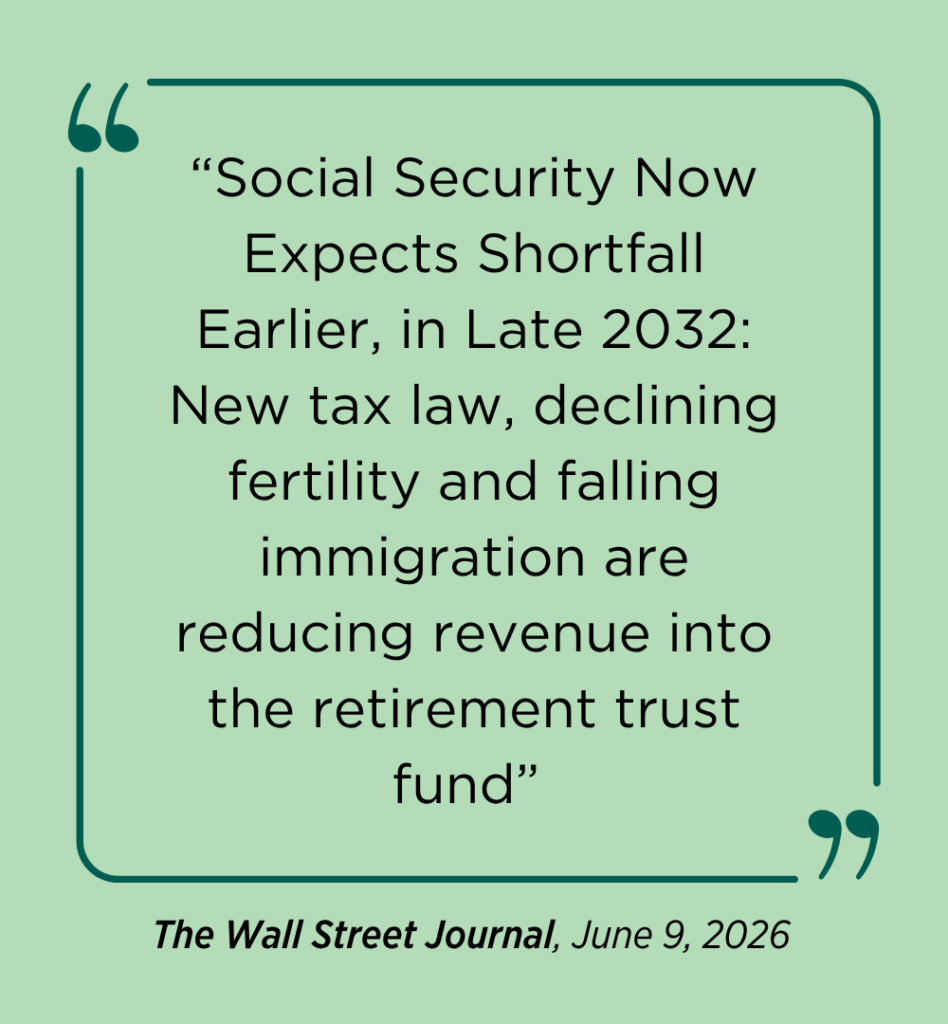
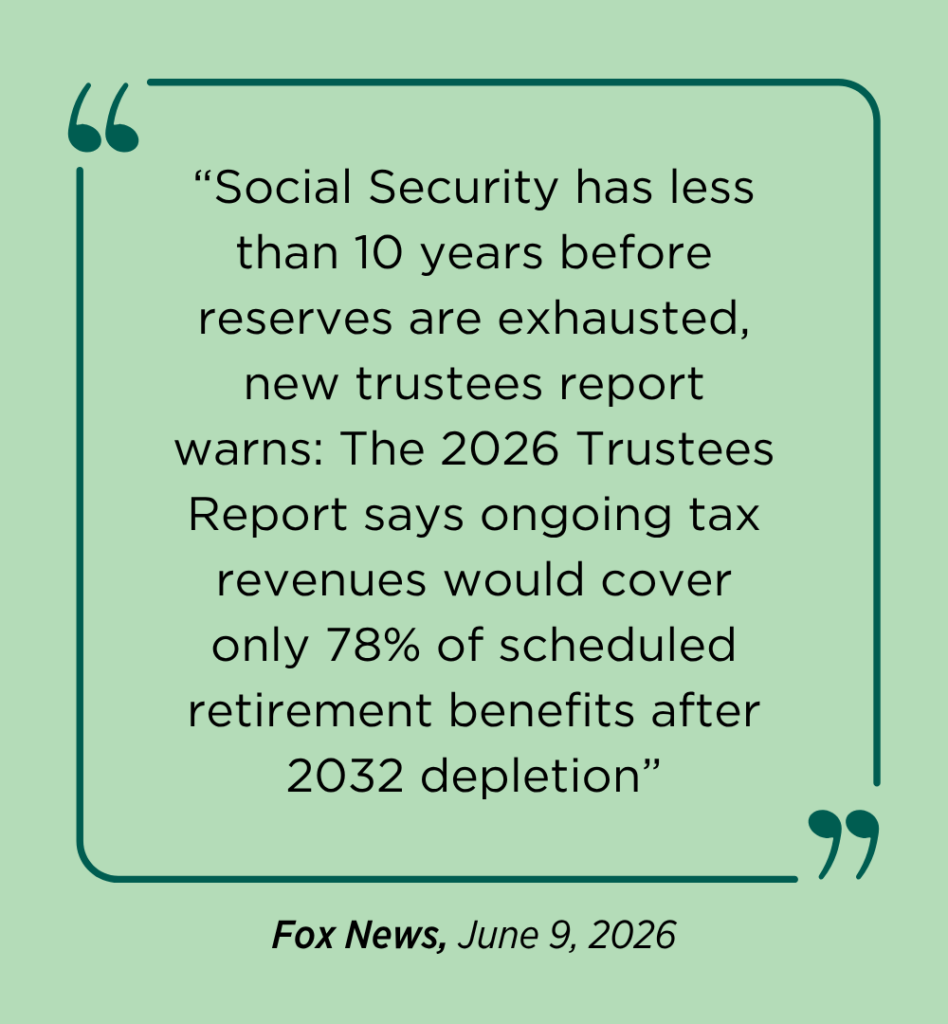
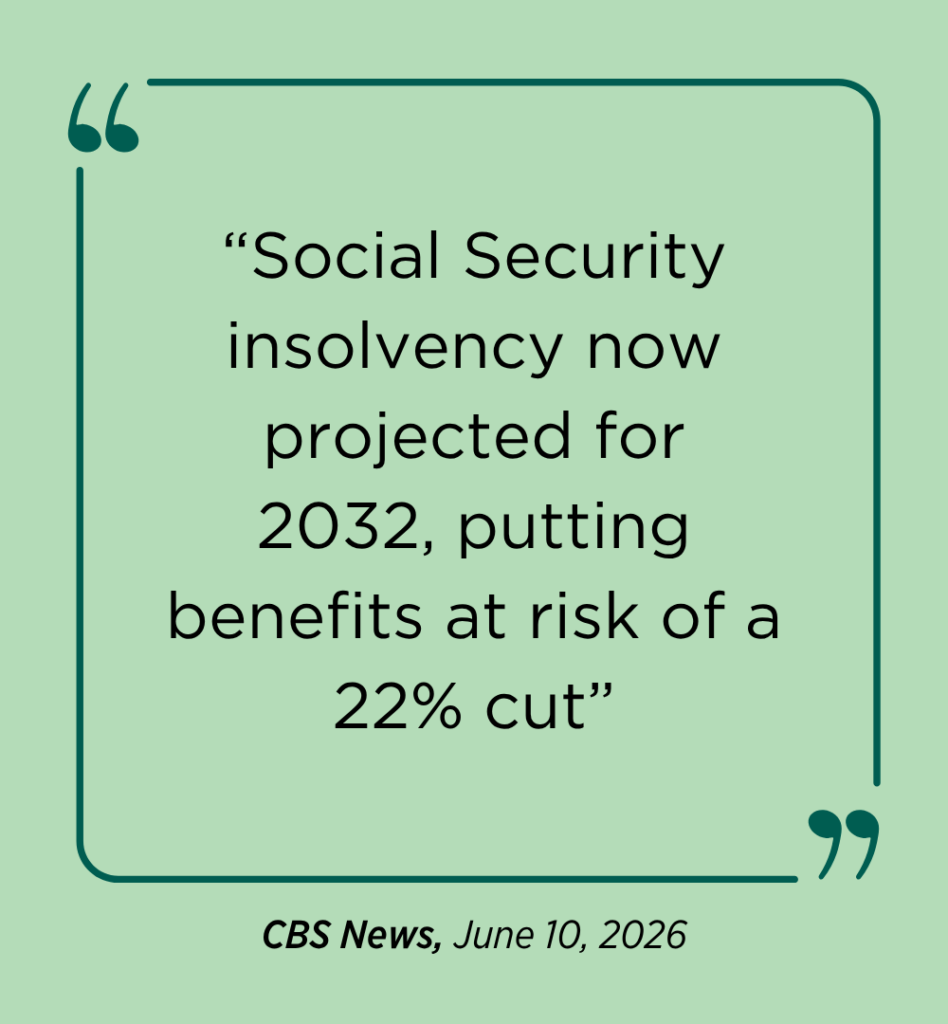
Six years isn’t very far off, and paying out only 78% of the promised benefit would be significant. What would this mean for your retirement income?
The short answer is, it means you will likely wish you had planned for that benefit to come from somewhere else! After all, no one wants to retire only to find out they aren’t getting the benefit they desire from their retirement plans.
As our whitepaper explains, we design Supplemental Executive Retirement Plans (SERPs) with whole life insurance from mutual insurance companies to help ensure that every executive gets the retirement benefit they planned for. The same driver, wanting executives to have the retirement they expect, led us almost a decade and a half ago to only consider 70% of the promised Social Security benefit when evaluating an executive’s overall retirement situation and designing a SERP for them. We chose the 70% haircut to Social Security based on all the information we could collect and our deep understanding of the math involved in retirement planning. It has proven to be on the mark.
Let’s take a deeper look at the current uncertainty around Social Security, the value of conservative projections in retirement planning, and how your SERP can help ensure your benefit at retirement is what you want it to be.
The Uncertainty About Social Security for Retirement
Social Security operates largely (say 90%) as a “pay-as-you-go” system, meaning the taxes collected from current workers immediately fund the benefits paid to today’s retirees and beneficiaries. The balance of benefits funding comes from taxation of benefits received by higher-income benefit recipients (estimated at 4% of the program’s funding) and trust fund interest (about 5%).
Without action by Congress, the trust fund is projected to run out in 2032, resulting in lower benefit payouts. (Get a detailed accounting of this in The 2026 Annual Report of the Board of Trustees of the Federal Old-Age and Survivors Insurance and Federal Disability Insurance Trust Funds.)
Congress has a history of taking action to fix Social Security. In 1983, Congress did so in the ninth inning, right before benefits would have been reduced.
According to this article from The Motley Fool, the 1983 fix to Social Security increased the full retirement age from 65 to 67; implemented payroll tax increases earlier; taxed some higher-income retirees’ Social Security benefits for the first time; delayed annual cost-of-living adjustments by six months (saving Social Security about $40 billion throughout the 1980s); and expanded Social Security coverage to newly hired federal employees beginning in 1984, which increased the number of workers paying into the system.
The revised arrangement was expected to work for 75 years—until 2058. But Social Security is in trouble again because the 1983 fixes were made based on then-current demographic assumptions. Americans now have longer life expectancies; the massive baby boomer generation is reaching retirement age, and significantly fewer people are now working (and contributing to the program) for each person now receiving Social Security than in the 1980s.
Congress could fix Social Security once again with actions similar to those it took in 1983. Proposals have been made, but none of them are making headway. In the end, exactly what action Congress will take, and when, is uncertain and outside our control.
All this begs a key question: How much uncertainty do you want in your retirement benefit?
The Value of Conservative Projections in Retirement Planning
PARC Street Group’s SERP clients are already benefiting from our conservative and thorough plan design. We often talk about our commitment to using whole life insurance from a mutual insurance company as the basis for our SERPs. Our whitepaper details why this is so important to plan success.
In tandem with basing plans on whole life insurance, we also consider only 70% of promised Social Security income. And that means we design SERPs to mitigate this uncertainty.
If Congress acts and Social Security happens to deliver benefits greater than current estimates, all the better. But regardless of what Congress does or doesn’t do, our SERP clients are on solid footing for retirement.
If you’re setting up a new SERP or your existing plan doesn’t account for the risk of a lesser Social Security benefit, please reach out.
CRN202908-11691182
About the Author

Chris J. Jones, CLU®, ChFC®
Partner & Senior Benefits Consultant
Known for his analytical mindset and mathematical precision, Chris works closely with credit unions to design Supplemental Executive Retirement Plans (SERPs) that are not only durable and compliant but also grounded in data that supports long-term performance. With more than three decades in financial services, he has built a reputation for ensuring that every plan rests on solid numbers and delivers on its promise to executives and boards.
Since 2014, Chris and his team have implemented more than 200 split-dollar SERPs for credit unions and nonprofits, each one on track or exceeding its original performance projections.